Cost of Valor
Two AI-generated trailers bringing retired Army helicopter pilot Col. Gary Bridges' account of Operation Lam Son 719 to the screen, plus an honest account of where the tools held up and where they fell over.
The project
This one started somewhere outside the university, which is usually how the good ones start. Connor McIntyre, a senior manager at Amazon, took an idea about AI-powered storytelling to Dr. Gary Garrison over at Belmont's Jack C. Massey College of Business. Garrison then did the thing that makes a university actually worth having: he went and found people in three different colleges who had never worked together. Me and Jake Mahaffy from the Mike Curb College of Entertainment & Music Business, and Dr. Emmanuel Saka from the Watkins College of Art.
What came out of it was two trailers built from Col. Gary Bridges' novel Cost of Valor. Bridges is a retired Army helicopter pilot, and the novel is about Operation Lam Son 719. We showed both on campus on 2 July 2026, to a room of industry people, academics, veterans and veteran support staff. One is cinematic and meant to put you inside the action. The other is documentary, pairing historical context with testimony out of the book. Both of them are proof of concept for a feature that doesn't exist yet. Neither one is a finished film, and I'd rather say that plainly than let anybody assume otherwise.
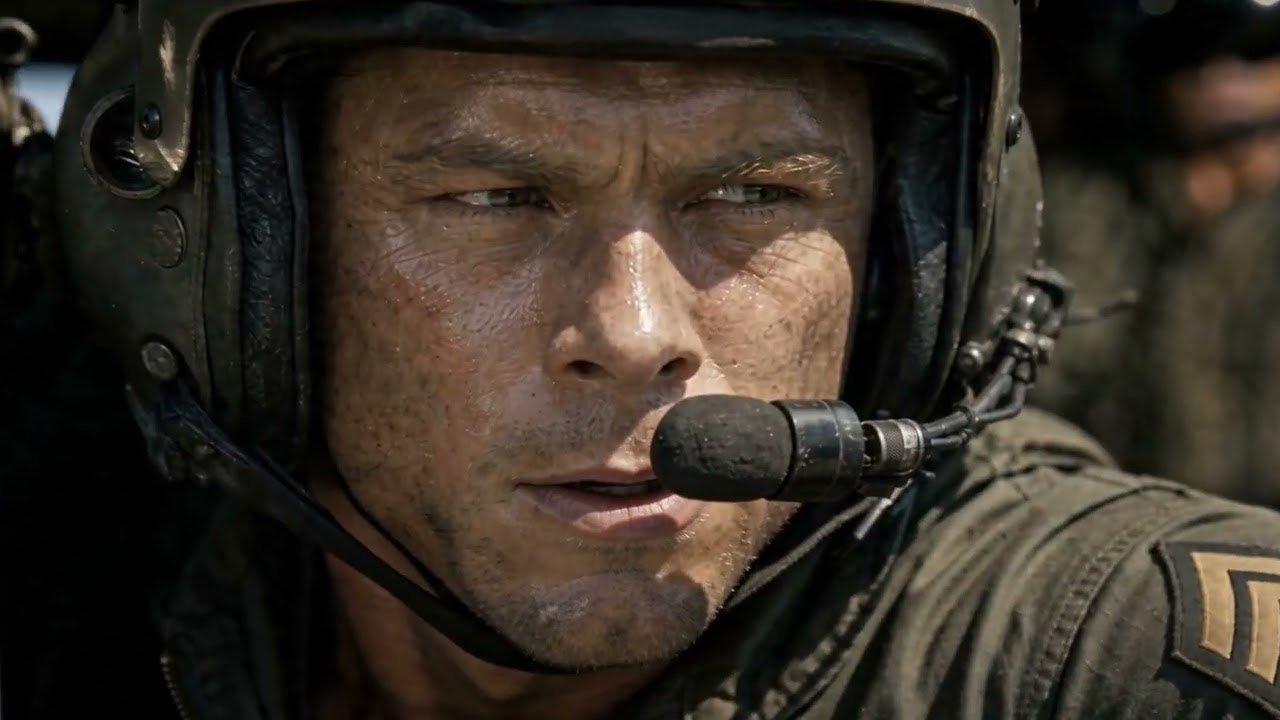
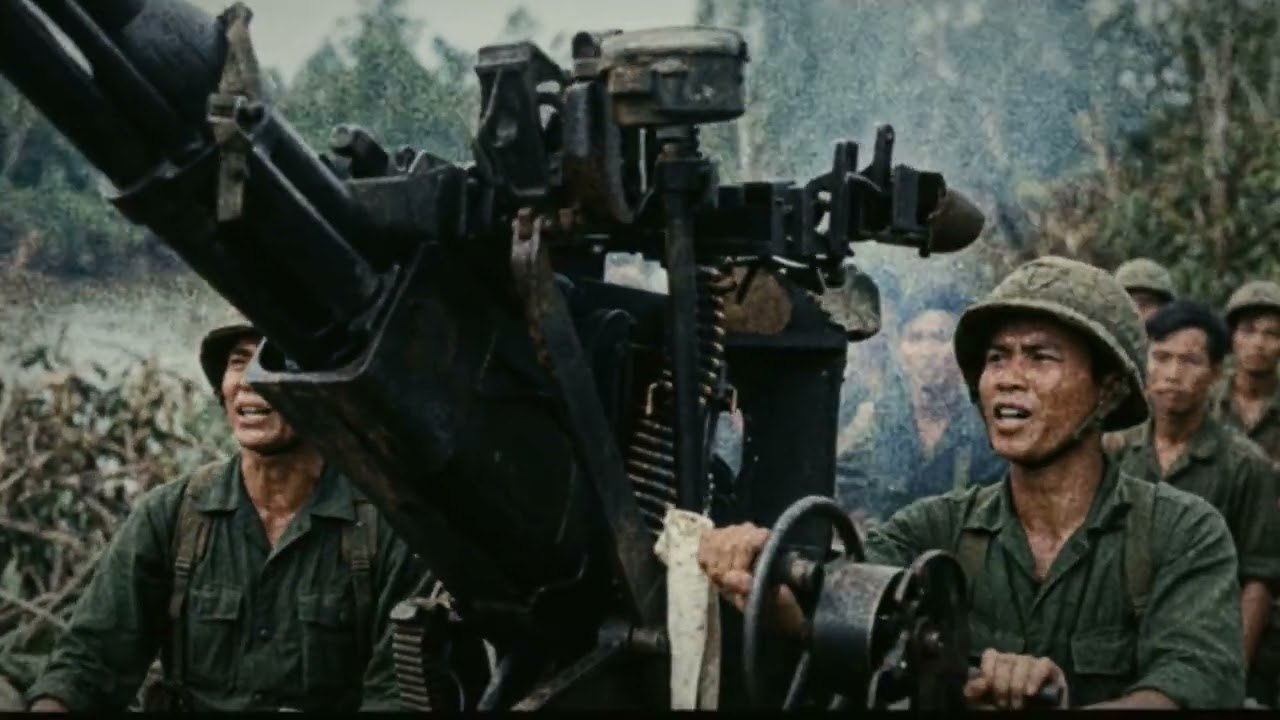
The numbers behind that operation are worth sitting with for a second. Roughly 725 helicopters supported it. 108 never came back. More than 600 came back damaged. More than 100 pilots were killed, and 19 are still missing today.
It's worth noting that everything that you see was generated with AI. The more we created with the various AI image and video models, the more we found various limitations, challenges and then some things that were surprisingly easy to make spectacular. Belmont University — July 2026
What the tools got wrong
Here's the part I actually want to talk about, because it's the part that doesn't make it into a press release.
Historical accuracy was the hardest problem by a mile. Well… Ok, that's overstating it a bit. The hardest problem was historical accuracy that looked fine, which is a different animal entirely. These models are very good at producing a frame that reads as correct at a glance and is dead wrong the second somebody who was there looks at it. Aircraft configurations. Equipment. Uniforms. What the ground actually looked like. Every one of those needed a human who knew the subject to catch it, and we caught them by looking, and then looking again.
The people were their own problem. AI-generated humans come out polished. Everybody's skin is even, everybody's jaw is symmetrical, and everybody looks like they got eight hours of sleep and had a stylist waiting. That is roughly the opposite of what you want in a story about twenty-year-olds flying into the worst day of their lives.
Then there are the guardrails. Depicting military conflict runs straight into safety systems that can't tell the difference between gratuitous violence and the historical record. I don't think that's a scandal, and honestly I'd rather they err in that direction than the other one, but it is a real constraint on this kind of work and it shaped a lot of what we made.
We had to get creative to invoke the feeling of this terrifying moment that has happened without necessarily showing it. That led to a lot of creative prompting to work around the scenario of creating that visceral energy without actually showing some of the things that the AI video models would simply reject. Belmont University — July 2026
So the process was: prompt, look, check it against the history, throw it out, prompt again. Over and over. The finding that matters most is also the least surprising one, which is that the human expertise never stopped being the load-bearing part. These tools will generate something remarkably convincing. Whether it's true is still somebody's job.
What we actually used
Since nobody ever puts this part in writing either: the images came out of ChatGPT Image 2 and Nano Banana, and the video was mostly Seedance 2.0 with some Kling 3.0 alongside it.
I'm naming them on purpose, and I'd encourage anybody writing up this kind of work to do the same. "We used AI" tells you nothing. These models have real personalities, they fail in specific and different ways, and half of what we learned was which one to hand a given shot to. That knowledge has a shelf life measured in months, which is exactly why it's worth writing down while it's still true.
Recognition
Two Lam Son 719 pilots, Ed Newton and Don Elmore, came to the showcase, and afterward they presented our team with the Challenge Coin and the Army's 223rd Combat Aviation Battalion Blue Star Patch. I've been handed a few things over twenty-five years of doing this. Nothing else on the shelf means what those mean.
Watch and read
-
YouTube · Nathan E Adam
-
YouTube · Nathan E Adam
-
Belmont University · by Jasmine Simmons · 9 July 2026
Wondering which half of your own work is at risk?
Ten questions about how you actually get paid, and my honest read on what's exposed and what isn't. No score, because a score would be a number I made up.