Teaching audio through a pandemic
Exploring the Audio Engineering Technology Faculty Teaching Experience during the COVID-19 Pandemic. Doctoral dissertation, Tennessee State University, 2022.
The question
Audio engineering is taught by putting people in front of equipment. That's it. That's the pedagogy. In March 2020 the equipment stayed locked in the building, the students went home, and every faculty member teaching the subject had roughly a week to invent a replacement for the only method any of us had ever used.
So the research asked what they actually did. Not what the institutional guidance said to do. Not what the reports written afterward claimed happened. What people teaching a hands-on technical subject genuinely reached for once you took the hands away, and what it cost them to do it.
The study
A qualitative study of Audio Engineering Technology faculty who taught online, synchronously and asynchronously, across spring and fall 2020. An online survey of 25 faculty, followed by focus group interviews that filled in what the survey couldn't.
The framework is Community of Inquiry, which splits what happens in a classroom into three kinds of presence: teaching, social, and cognitive. It's a useful lens here precisely because a studio course leans hard on all three at once, and remote teaching broke them at different rates. Losing the room isn't one problem. It's three, and they don't fail together.
Full record and PDF: Digital Scholarship @ Tennessee State University, ETD Collection, Paper AAI29256098.
Why it was worth writing down
Because the honest answer to “how did that go” was disappearing fast. Institutions had strong incentives to record the period as a success, and individual faculty had no particular incentive to say otherwise in public. Meanwhile the practical knowledge (which substitutions worked, which ones quietly failed, what a student actually loses when the room goes away) was sitting in the heads of people who were extremely keen to stop thinking about it.
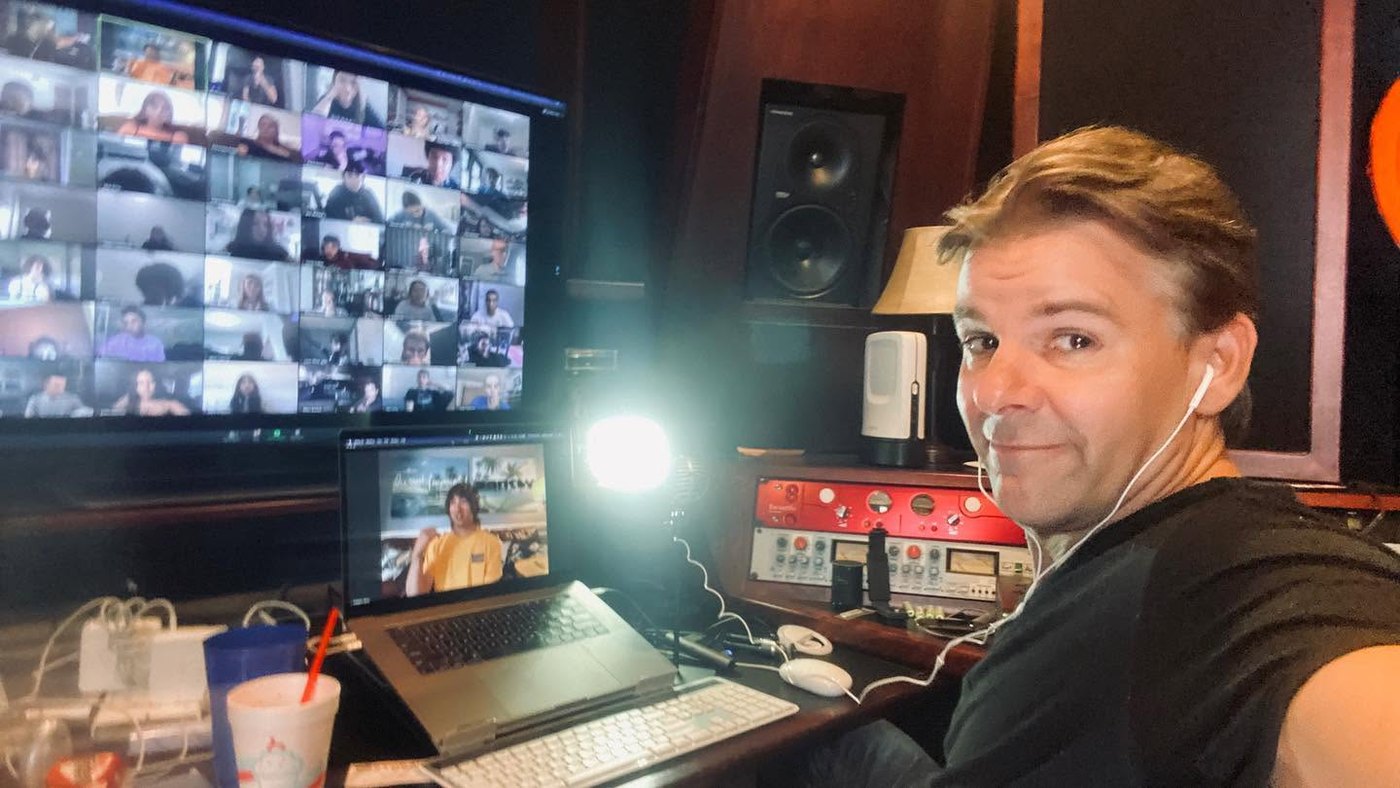
I was one of them. I taught GRAMMY Camp through a laptop in those years, from a control room, to a grid of faces. Running that class is not the same job, and pretending otherwise would have made the research worthless.
Where it went next
I presented a paper drawn from this work at the MEIEA Summit in Las Vegas in March 2023, alongside a roundtable called The Computers Took Over at Midnight. The through-line from it to the current work on generative AI in the classroom is direct: both are questions about what a technology actually does to teaching, asked by looking at what teachers do rather than at what the technology promises.
Related
GRAMMY Camp is where the online teaching happened. Speaking has the MEIEA papers.
Wondering which half of your own work is at risk?
Ten questions about how you actually get paid, and my honest read on what's exposed and what isn't. No score, because a score would be a number I made up.